How Chicago Sports Stadiums Will Transform Downtown Real Estate: A Market Revival Story
Will New Sports Stadiums Help Chicago's Downtown Real Estate Market?
Yes. Chicago's approved and proposed sports stadium projects represent over $3 billion in definite investment with potential for more, fundamentally transforming the city's downtown real estate landscape. The Chicago Fire's $650 million stadium—approved by City Council and breaking ground in 2026—will anchor "The 78" South Loop development, while the Chicago Bears pursue a $2+ billion state-of-the-art facility in Arlington Heights. These mega-projects are poised to catalyze residential, commercial, and mixed-use development across the urban core.
Understanding Chicago's Stadium Renaissance
The Chicago Bears' Stadium Vision
The Chicago Bears organization has announced plans to build a revolutionary fixed-roof stadium in Arlington Heights, approximately 25 miles northwest of their current Soldier Field home. This ambitious project, which President Kevin Warren describes as requiring "zero state money for construction," represents over $2 billion in private investment by the team.
Key features of the Bears' Arlington Heights proposal include:
- Location: Former Arlington Park Racetrack site (326 acres)
- Capacity: 60,000-70,000 seat enclosed stadium
- Timeline: Construction targeted to begin in 2026, opening by 2029
- Infrastructure Investment: Seeking $855 million in public funding for roads, sewers, and transit improvements
- Economic Impact: Projected to create 56,000 construction job years and 9,000 permanent jobs
The team initially explored a lakefront stadium proposal at Museum Campus in April 2024, which would have demolished Soldier Field and created a $4.7 billion development. However, by September 2025, the Bears officially confirmed Arlington Heights as "the only site within Cook County that meets" their project standards, pivoting away from the controversial lakefront plan that faced opposition from Governor J.B. Pritzker and conservation groups.
The Chicago Fire's Approved Downtown Stadium
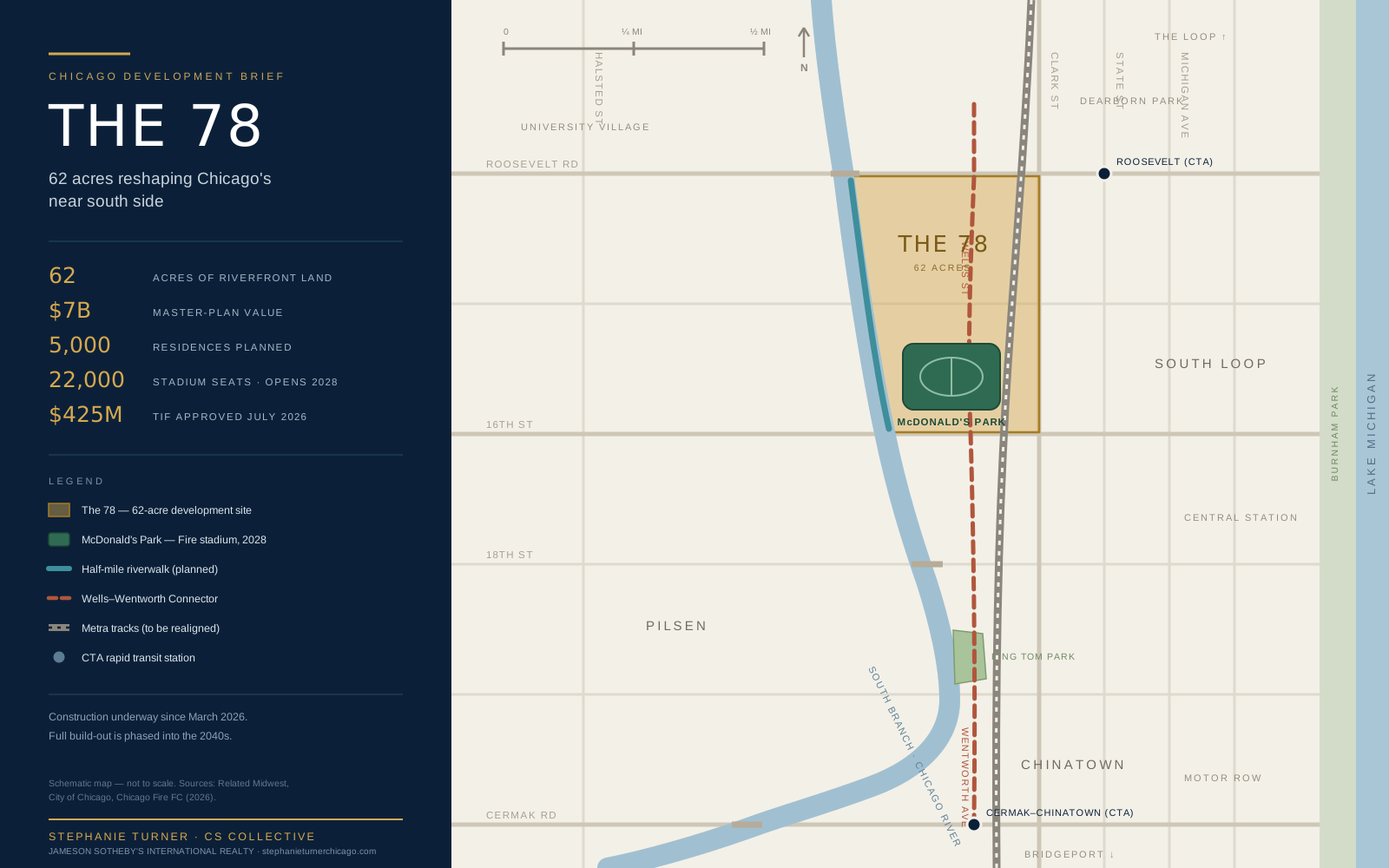
In a major win for downtown Chicago, the Chicago Fire FC secured City Council approval in September 2025 for a $650 million soccer-specific stadium at "The 78"—marking the first major stadium built in Chicago in more than 30 years. Unlike many stadium proposals, this project is entirely privately funded by team owner and Chicago billionaire Joe Mansueto, founder of Morningstar Financial Services.
Key features of the Chicago Fire stadium include:
- Location: The 78 development site, Roosevelt Road and Clark Street along the Chicago River
- Capacity: 22,000-seat open-air natural grass stadium
- Funding: $650-750 million, 100% privately financed by Joe Mansueto (no public stadium funding required)
- Timeline: Construction begins early 2026, opening targeted for 2028 MLS season
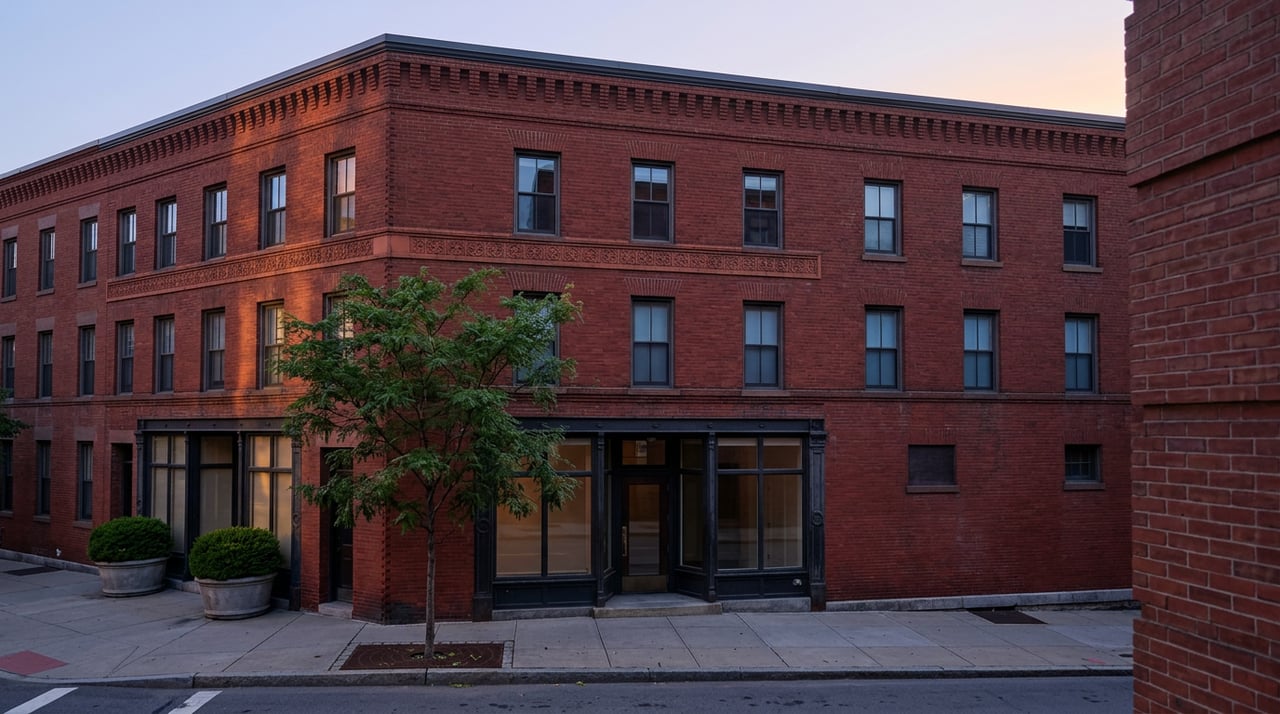
- Design: "Chicago School" industrial aesthetic by Gensler, featuring brick facade reminiscent of historic warehouses
- Accessibility: Direct access to CTA Red, Orange, and Green Lines; multiple bus routes; Metra stations within walking distance
- Year-Round Use: Designed as mixed-use venue for concerts, events, and entertainment beyond soccer matches
The Fire stadium received unanimous City Council approval in September 2025 after community meetings and traffic studies. Construction at The 78 is expected to begin by early 2026, creating thousands of construction and permanent jobs. MLS Commissioner Don Garber called it "one of the most ambitious stadium projects in Major League Soccer history."
This approved project serves as the critical catalyst for The 78's overall development, providing the anchor tenant that has eluded the site for decades despite multiple previous proposals including Amazon HQ2, United Airlines headquarters, and a casino.
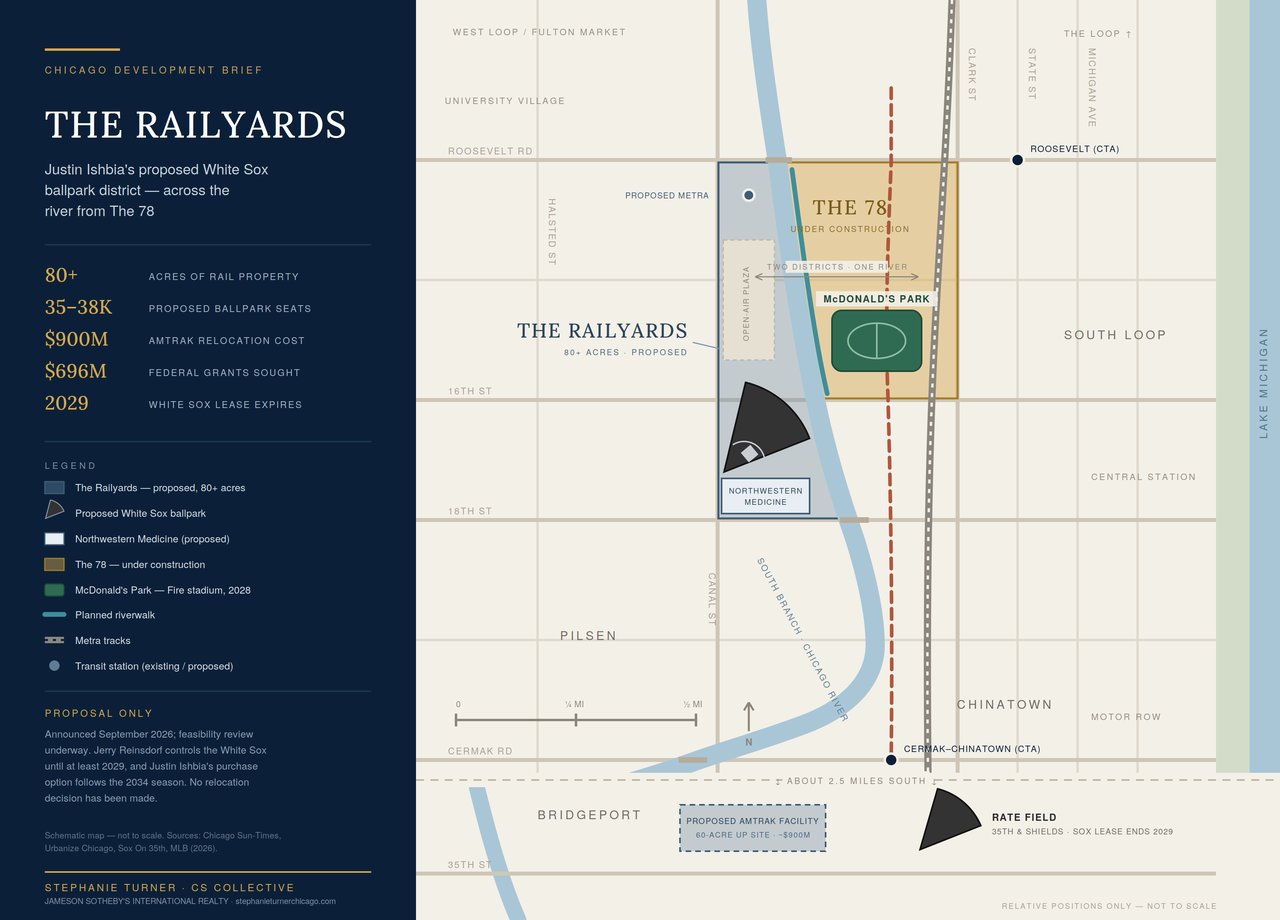
Note on White Sox Speculation: The White Sox explored a stadium at The 78 in 2024 with renderings and temporary baseball field displays, but their proposal requiring approximately $1 billion in public funding stalled when Springfield legislators declined to support it. While team officials have stated The 78 "remains a possibility" and some analysts suggest the 62-acre site could theoretically accommodate both stadiums, no concrete plans, financing, or approvals exist for a White Sox move. The team's lease at Guaranteed Rate Field runs through 2029, and ownership is currently in flux. For real estate investment purposes, the Fire stadium represents the definitive catalyst while any White Sox development remains highly speculative.
How Stadium Developments Drive Downtown Real Estate Recovery
The Economic Multiplier Effect
Major sports facilities function as powerful economic engines that extend far beyond game days. Chicago's proposed stadium projects could generate significant spillover benefits for surrounding real estate markets through several mechanisms:
Certainty Creates Opportunity: The Fire Stadium Advantage Unlike speculative proposals, the Chicago Fire stadium provides real estate professionals with timeline certainty and guaranteed development. With City Council approval secured, $650-750 million in private financing committed, and a 2026 construction start, this is Chicago's most concrete near-term sports infrastructure investment. Properties near The 78 now have a definitive catalyst event to plan around, reducing investment risk compared to speculative development scenarios.
Job Creation and Population Growth The Bears' project alone promises 56,000 construction job years and over 9,000 permanent positions. The Fire stadium will create thousands of construction and permanent jobs in South Loop hospitality, retail, and event operations. This employment surge drives housing demand as workers seek nearby residences, putting upward pressure on both rental and sales markets.
Retail and Hospitality Expansion Modern stadium districts incorporate year-round entertainment, dining, and retail destinations that attract visitors beyond sporting events. The Fire stadium explicitly includes design elements to create a Wrigleyville-style atmosphere with extensive food, beverage, and retail spaces as part of "The 78" mixed-use development. These amenities create neighborhood vibrancy that elevates nearby property values.
Infrastructure Improvements Public infrastructure investments accompanying stadium projects—improved roads, enhanced transit connections, upgraded utilities—benefit entire neighborhoods. The Bears are seeking $855 million for infrastructure improvements, while the Fire stadium development will require infrastructure enhancements at The 78 including improved access roads, expanded transit capacity, and riverwalk improvements. These upgrades make surrounding areas more attractive for residential and commercial development.
Current Downtown Chicago Real Estate Market Context
Chicago's downtown real estate market has demonstrated remarkable resilience in 2025, setting the stage for stadium-driven acceleration:
Residential Market Strength Summer 2025 data reveals Chicago's downtown real estate market significantly outperformed national trends:
- Home prices in Chicago proper increased 8% year-over-year in summer 2025
- The luxury segment above $4 million saw sales jump 68% compared to 2024
- A record-setting $31.25 million mansion sale established the all-time Chicago-area price record
- Downtown median sales prices reached $315,000 in May 2025, up 5% from May 2024
Return to Urban Living After the pandemic-driven suburban exodus, experts including Dr. Lawrence Yun, Chief Economist of the National Association of REALTORS®, predict a shift back toward urban living driven by office return mandates and rising suburban rents. This reversal positions downtown neighborhoods to benefit disproportionately from stadium-related development.
Inventory Challenges Creating Opportunity Chicago's tight inventory conditions—even areas like the Loop and Near North Side now have just 3.5 months of supply after peaking above eight months in 2023—mean new stadium-driven housing supply could help balance the market while maintaining price stability.
Neighborhood-Specific Real Estate Impacts
South Loop and "The 78" Transformation
The Chicago Fire stadium—approved and funded—represents the breakthrough moment for transforming a vacant 62-acre former rail yard into Chicago's 78th neighborhood. Unlike speculative proposals, this is a done deal with construction beginning in 2026. Real estate implications include:
Immediate Development Catalyst The Fire's $650-750 million stadium serves as the anchor tenant that Related Midwest has sought for years. The first phase includes the 22,000-seat stadium, two apartment buildings, extensive retail, dining, and potentially a White Sox ballpark as a complementary second sports venue. This concentrated development creates immediate housing and commercial space absorption with guaranteed timeline certainty.
Proven Private Investment Model Joe Mansueto's 100% private financing demonstrates investor confidence in the South Loop location. His recent $100 million privately-funded training facility on the Near West Side (opened March 2025) shows his commitment to Chicago-based development. This sets a precedent that attracts additional private capital to surrounding properties.
Direct Development Impact With City Council approval secured and construction starting early 2026, adjacent property owners can now plan confidently around a 2028 opening. The stadium's year-round event programming (concerts, festivals, entertainment beyond 17 home matches) creates sustained foot traffic and demand for nearby housing, retail, and hospitality.
Spillover to Surrounding Areas Adjacent neighborhoods including Bronzeville, Chinatown, and the existing South Loop stand to benefit from increased foot traffic, improved connectivity, and elevated area prestige. Expect appreciation in single-family homes, townhouses, and condo conversions within a one-mile radius. The Fire expects to create an atmosphere similar to Wrigleyville's organic development, with festive fans supporting surrounding bars, restaurants, and retail.
Riverwalk Extension Value The proposed half-mile of Chicago River frontage would exponentially expand the city's successful Riverwalk concept, creating premium waterfront real estate opportunities analogous to the transformation along the North Branch in Lincoln Yards. The stadium's riverside location on the northern portion of The 78 site maximizes waterfront activation and leaves substantial acreage for additional mixed-use development phases.
Arlington Heights and Northwest Suburbs
While technically outside downtown Chicago, the Bears' Arlington Heights stadium would redirect billions in investment and create ripple effects throughout the metropolitan area:
Transit-Oriented Development The site's direct Metra connection to Ogilvie Station (45-50 minutes downtown) positions Arlington Heights as a Super Bowl and major event destination with direct downtown access. This enhanced connectivity could boost demand for downtown hospitality properties and luxury residences near Union/Ogilvie stations.
Mixed-Use Development Precedent The Bears envision a mixed-use district around the stadium. Similar developments like The Battery Atlanta (near Truist Park) demonstrate how stadium-anchored projects drive significant residential, retail, and office development valued at hundreds of millions beyond the facility itself.
Regional Competitive Positioning A modern, enclosed stadium capable of hosting Super Bowls (targeted for 2031), Final Fours, and major concerts positions the Chicago region to compete with Indianapolis, Minneapolis, and other Midwest metros for premium events. This elevated profile attracts business investment and high-net-worth residents to the broader Chicago market.
West Loop and Downtown Core Enhancement
Even without a downtown Bears stadium, the collective momentum of major sports investments enhances Chicago's overall market appeal:
Climate-Safe Investment Narrative Chicago is increasingly positioned as a climate-safe real estate market, attracting environmentally conscious investors seeking long-term stability. Major sports infrastructure investments reinforce the narrative of Chicago as a stable, forward-looking market compared to climate-vulnerable coastal cities.
Luxury Market Catalyst The luxury real estate segment's 68% surge in $4+ million sales demonstrates high-net-worth buyer confidence. Stadium projects that elevate Chicago's national profile and entertainment offerings make the city more attractive to affluent buyers considering Chicago versus coastal alternatives.
Commercial Real Estate Stabilization While Chicago's CBD office market faces challenges (negative absorption since 2020), major sports and entertainment investments help diversify downtown's economic base beyond traditional office employment, supporting retail, hospitality, and residential conversions.
Investment Opportunities for Real Estate Professionals
Strategic Positioning Before Development
Savvy real estate professionals and investors should consider these strategies to capitalize on stadium-driven development:
Immediate Action: Fire Stadium Proximity (2026-2028) With construction beginning early 2026 and opening in 2028, the Chicago Fire stadium offers the most immediate investment timeline. Focus on:
- Properties within 0.5-mile radius of The 78 (Chinatown, South Loop, Bronzeville)
- Roosevelt Road corridor east-west from Clark to Michigan
- Multi-family buildings positioned to capture Fire staff, visiting team accommodations, and fan demand
- Retail/restaurant spaces that could benefit from 22,000+ attendees at matches, concerts, and events
- Properties with river views or walking distance to the new stadium
Target Undervalued Neighborhoods Focus on South Loop areas within walking distance of "The 78," particularly properties along Roosevelt Road, Cermak, and Chinatown that will benefit from improved connectivity and increased foot traffic. The Fire stadium's 2028 opening provides a concrete appreciation catalyst.
Multi-Family Investment Focus The Fire stadium (approved) and its surrounding development emphasize residential components. The rental market continues to thrive, with downtown Chicago seeing strong occupancy rates of 95.1%. Multi-family properties positioned to capture stadium-related rental demand offer compelling opportunities, particularly given the Fire stadium's certain 2028 delivery date.
Mixed-Use Conversion Potential As stadium districts drive retail and entertainment demand, older commercial properties near proposed sites may present conversion opportunities to mixed-use or residential use.
Luxury Inventory Positioning The surge in luxury sales suggests continued strength in the high-end market. Properties offering proximity to world-class sports and entertainment amenities command premium valuations.
Due Diligence Considerations
While the stadium projects offer significant upside, professionals should evaluate several key factors:
Project Status Differentiation The two concrete stadium proposals have different certainty levels:
- Chicago Fire (The 78): APPROVED—City Council voted unanimously September 2025, $650-750 million private financing secured by Joe Mansueto, construction starts 2026, opens 2028. Lowest risk, guaranteed catalyst for South Loop.
- Chicago Bears (Arlington Heights): ADVANCED—Site purchased ($197M), infrastructure studies submitted, targeting 2026 construction start. Requires state infrastructure funding ($855M) and property tax agreements. Moderate risk.
Investors should weight their positions accordingly, with greatest confidence in Fire-adjacent properties and moderate exposure to Arlington Heights corridor. Note: While the White Sox have discussed The 78 as a potential location, their 2024 proposal stalled and no concrete plans exist—consider any White Sox-driven appreciation purely speculative.
Financing and Timeline Uncertainty The Fire stadium is fully financed privately with construction beginning 2026. The Bears require property tax certainty and infrastructure funding from Springfield. Monitor Bears legislative developments closely, particularly the Illinois General Assembly's sessions in 2025-2026.
Competition from Alternative Projects Chicago has multiple major developments in progress, including Lincoln Yards, Bronzeville Lakefront (former Michael Reese Hospital site), and continued build-out of existing neighborhoods. Stadium projects compete for development capital, buyer attention, and public resources.
Economic Conditions Current mortgage rates around 6.75% impact affordability, though rates are expected to decline toward 6.0-6.5% by year-end 2025. Interest rate trajectories will influence the pace of stadium-driven residential absorption.
Political Risk Stadium projects remain subject to governmental approvals, potential legal challenges (especially any lakefront alternatives), and public sentiment regarding subsidies. The Illinois General Assembly's November session will be critical for both projects.
Market Data: Quantifying the Stadium Effect
Comparable Market Analysis
Other cities provide instructive examples of stadium-driven real estate transformation:
Minneapolis - U.S. Bank Stadium (2016) The $1.1 billion stadium catalyzed Downtown East development including residential towers, hotels, and a light rail extension. Nearby residential property values increased 15-20% in the five years following the stadium opening.
Atlanta - Mercedes-Benz Stadium (2017) The stadium anchored a broader downtown revitalization including Centennial Yards ($5 billion mixed-use development). The surrounding Vine City and English Avenue neighborhoods saw median home prices increase over 30% from 2017-2022.
Arlington, Texas - AT&T Stadium (2009) The Cowboys' stadium sparked development of the adjacent Texas Live! entertainment district and continues to drive hotel, retail, and multi-family development throughout Arlington's Entertainment District.
Chicago-Specific Projections
Based on current market data, comparable stadium impacts, and the certainty of the Chicago Fire stadium, Chicago could experience:
Residential Appreciation (with Fire stadium as baseline catalyst):
- South Loop/Near South Side (within 0.5 miles of The 78): 12-18% additional appreciation from 2026-2030 beyond baseline market growth, accelerating in 2027-2028 as stadium completion approaches
- South Loop/Near South Side (0.5-1 mile radius): 10-15% additional appreciation over 5 years
- Arlington Heights/Northwest Corridor (if Bears proceed): 8-12% premium for properties within 2 miles of stadium
- Downtown Luxury Segment: Continued outperformance with 5-8% annual appreciation, boosted by improved South Loop desirability
Inventory Response: Dr. Yun's projection that Chicago has reached the "lowest point in inventory" suggests upcoming supply increases. Stadium-driven demand could absorb this inventory while maintaining price stability, preventing the oversupply issues affecting Sun Belt markets.
Commercial Impact: The Fire stadium and The 78 development are projected to generate significant economic impact and tax revenue for Chicago, though specific figures will depend on the full build-out of Related Midwest's mixed-use vision. Retail vacancy in the Loop (29.78% in 2024, down from 30.13% in 2023) could see accelerated improvement as Fire stadium-driven foot traffic and the broader 78 development support retail absorption in adjacent South Loop areas.
Addressing Common Concerns
Will Public Subsidies Deliver Returns?
Stadium subsidy debates generate significant controversy. Economic research presents mixed findings on stadium ROI, but several factors suggest Chicago's situation differs from typical cautionary tales:
Scale of Private Investment The Bears commit over $2 billion private capital, while White Sox/Related Midwest project $7 billion total private investment. These ratios exceed typical stadium deals where public subsidy percentages run much higher.
Mixed-Use Integration Unlike single-purpose stadiums, both Chicago proposals integrate extensive residential, retail, and entertainment components that generate year-round economic activity and sustained tax revenue.
Existing Debt Considerations Chicago already carries stadium debt—the Illinois Sports Facilities Authority owes $589 million on Soldier Field renovations and $50 million on Guaranteed Rate Field. Refinancing this debt alongside new stadium financing could potentially improve overall municipal finances compared to the status quo.
What If Projects Don't Proceed?
Real estate professionals should maintain balanced perspectives given project uncertainties:
Baseline Market Strength Chicago's downtown market demonstrates fundamental strength independent of stadium projects. The 8% year-over-year price appreciation, luxury market surge, and return to urban living suggest underlying positive momentum.
Alternative Development Scenarios If stadium projects fail, alternative developments will eventually fill the void. The 78's 62 acres and the Arlington Park site's 326 acres represent premium development opportunities that will attract investment regardless.
Diversified Growth Drivers Chicago's resurgence extends beyond sports facilities. Population growth has resumed after a decade of decline, climate migration trends favor Chicago, and the city's affordability advantage versus coastal markets continues attracting residents and investors.
Conclusion: Positioning for Chicago's Sports-Driven Renaissance
The Chicago sports stadium developments represent transformational opportunities for the city's real estate market, with one project already delivering guaranteed results. The Chicago Fire's approved $650-750 million stadium provides the concrete catalyst The 78 has needed for decades, with construction beginning in 2026 and opening in 2028. Combined with the Bears' $2+ billion Arlington Heights pursuit, these projects represent over $3 billion in committed investment—creating tens of thousands of jobs, massive infrastructure improvements, and year-round entertainment destinations that elevate Chicago's competitive position.
What makes this moment particularly compelling for real estate investors is the certainty of the Fire stadium. Unlike speculative proposals that languish in political negotiations, the Fire stadium is happening: privately financed by one of Chicago's most successful businessmen (Joe Mansueto of Morningstar), with unanimous City Council support, and a definitive 2026-2028 timeline. This is downtown Chicago's first major new stadium in over 30 years.
For real estate professionals, particularly those specializing in downtown, South Loop, West Loop, and Near South Side markets, the Fire stadium provides immediate action opportunities while the Bears proposal offers additional speculative upside in the northwest suburbs. The strategic opportunities—from targeting undervalued neighborhoods adjacent to The 78 to positioning luxury inventory for affluent buyers attracted by world-class amenities—could define market success through 2030.
Chicago's downtown real estate market has already demonstrated remarkable resilience and growth in 2025. The Fire stadium—approved, financed, and breaking ground in 2026—provides the guaranteed catalytic momentum to accelerate the urban core's comeback, transforming a vacant 62-acre rail yard into a vibrant, mixed-use neighborhood that anchors the city's next chapter of growth. If the Bears project also proceeds, Chicago's sports infrastructure renaissance could rival any Midwest city's development surge of the past two decades.
As these projects progress—the Fire stadium through construction phases and the Bears through legislative approval and financing negotiations—staying informed about developments will be essential for capitalizing on one of the Midwest's most significant real estate opportunities of the decade.
About the Author: Stephanie Turner is a Chicago real estate agent specializing in downtown and West Loop properties with 25 years of experience. For personalized guidance on navigating Chicago's evolving real estate market, contact Stephanie for a consultation.